1. When detail changes everything
There are moments when wine stops being just a product and becomes an experience. A spontaneous dinner that stretches late into the night, a last-minute gift that still feels thoughtful, a bottle that is not just handed over, but presented.
In that moment, packaging stops being invisible.
And yet, for years, wine bottle bags have been one of the most overlooked elements in retail. Fragile bags, poor aesthetics, uncomfortable to carry, or simply unable to match the quality of the product they contain.
The problem is not minor: when packaging fails, product perception suffers.
That’s why more and more wine shops, gourmet stores, wineries and specialized businesses are rethinking something essential: how to present a bottle of wine in a way that aligns with its value.
2. The role of packaging in the wine sector
Wine is culture, but it is also perception.
Even before opening a bottle, the customer has already formed an expectation. That expectation comes from labeling, storytelling… and also from packaging.
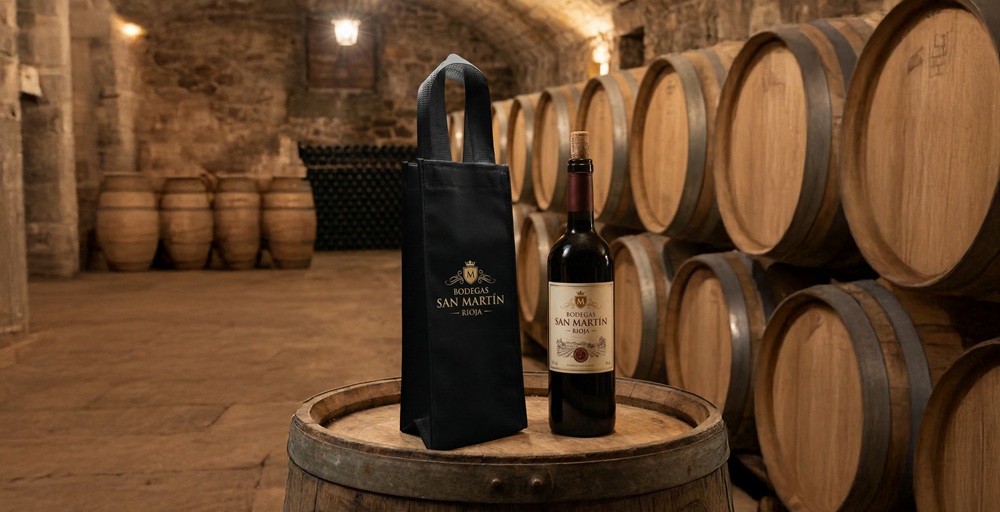
Packaging as a brand extension
In physical retail, packaging is the last touchpoint before the customer walks out the door. It is the closing of the experience.
A wine bottle bag is not just a means of transport:
- It is a branding tool
- It is a moving visual asset
- It extends the experience beyond the point of sale
When a customer walks with a well-designed, durable and attractive bag, the brand keeps communicating.
Direct influence on purchase decisions
In environments such as gourmet stores or wine shops, where many decisions are impulsive or emotional, packaging can tip the balance.
Good presentation:
- Increases perceived quality
- Justifies higher prices
- Improves willingness to gift
It’s not just about selling wine. It’s about selling the full experience.
3. Common problems with wine bottle bags
Despite their importance, many current solutions still fail at the basics.
Structural fragility
Low-quality paper bags or those without reinforcement tend to give way at the base, especially with heavy bottles. This creates insecurity during transport and an unreliable experience.
Lack of stability
Without a solid base, the bottle shifts, hits and loses stability. In some cases, it can even break.
Poor carrying experience
Uncomfortable handles, weak materials or poor ergonomics turn something simple like carrying a bottle into a nuisance.
Limited reusability
Many bags are designed for single use. This limits their value and goes against growing consumer expectations around sustainability.
Lack of differentiation
In an increasingly competitive market, using generic solutions means missing a clear opportunity to stand out.
4. What makes a good wine bottle bag
The evolution of packaging in the wine sector has redefined expectations.
It’s no longer enough to “do the job.” It must add value.
- Real durability
- Structural stability
- Reusability
- Refined aesthetics
- Customization
- Sustainability
Wine demands visual coherence. Packaging must match it.
5. A new solution for a known problem
In this evolving packaging landscape, new solutions are emerging to address real industry needs.
Diseños NT has developed a stitched wine bottle bag, designed not as simple wrapping, but as a functional and branding tool.
This is not a superficial improvement. It’s a rethinking of how a bag should perform in real use.
6. Technical features that make the difference
Beyond specifications, what matters is how each element performs in practice.
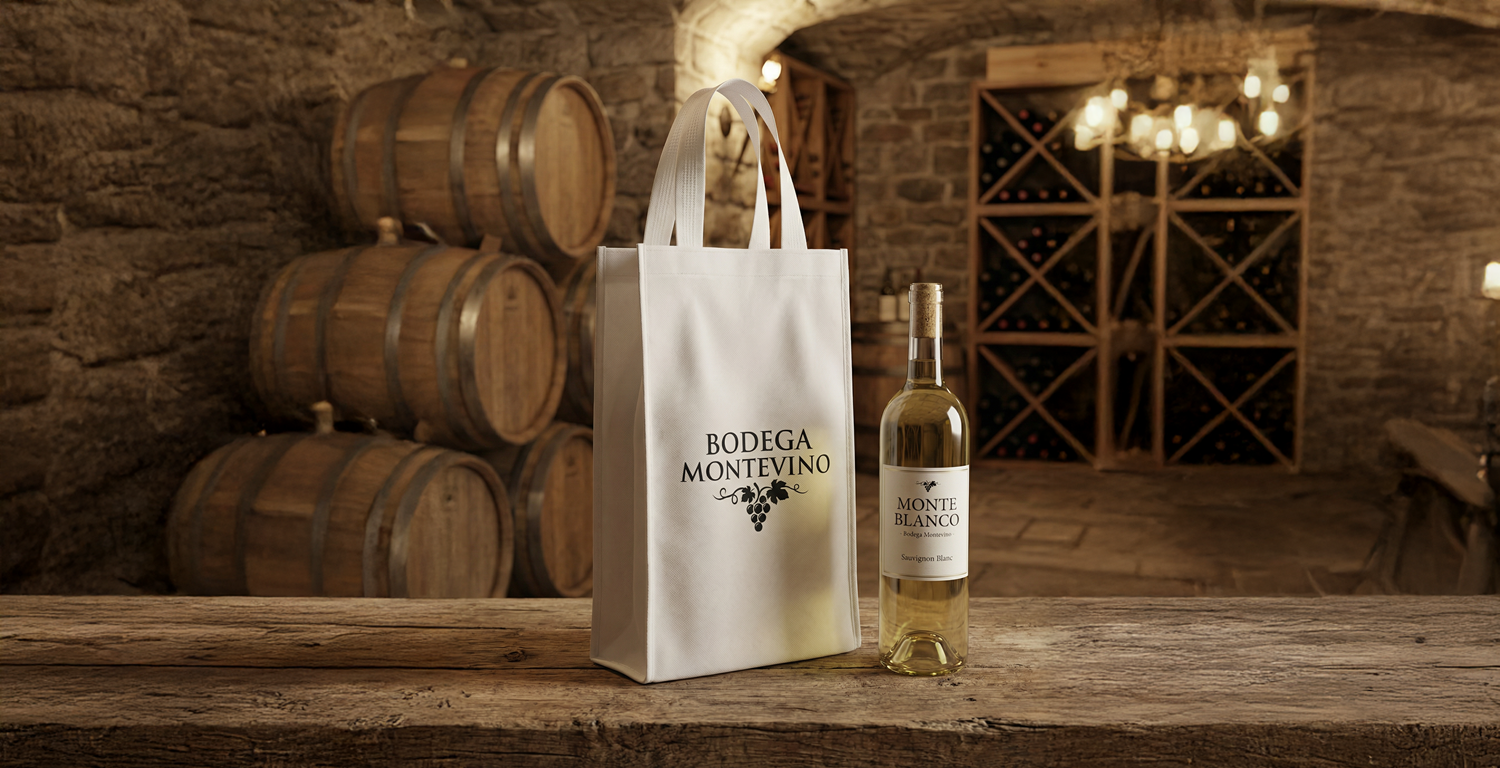
Short handle: control and comfort
- Better weight control
- Safer carrying
- Reduced bottle swing
Result: a more stable and comfortable experience.
Stitched construction: structural durability
Compared to heat-sealed or glued bags:
- Higher tensile strength
- Better performance in repeated use
- Longer lifespan
Designed to last.
100 g/m² non-woven fabric
Non-woven material has become one of the most efficient options for reusable packaging.
At this weight:
- Excellent strength-to-weight ratio
- Maintains shape
- Enables high-quality customization
It also conveys a more robust feel than lighter materials.
Reinforced cardboard base
A critical point in any bottle bag.
- Provides stability
- Prevents deformation
- Improves transport safety
The bottle stays firmly in place.
Internal securing straps
One of the most distinctive features.
- Holds the bottle from the inside
- Reduces movement
- Minimizes impacts
Designed to protect, not just contain.
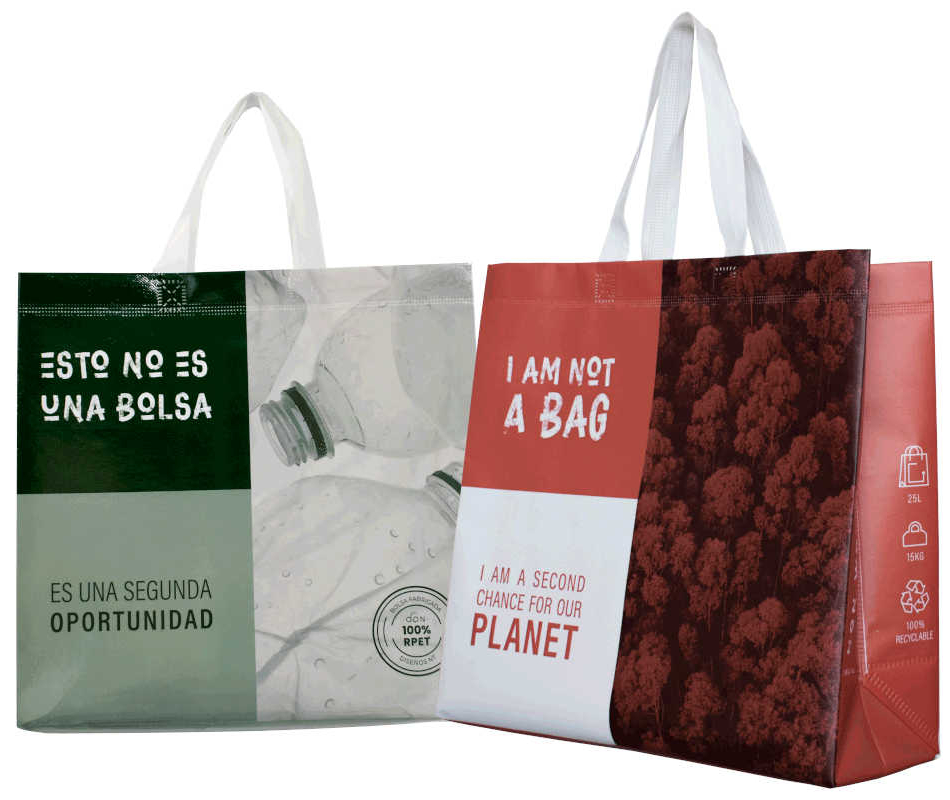
Reusable and 100% recyclable
Combining durability and recyclability addresses two key needs:
- Reducing waste
- Increasing perceived value
A bag that isn’t thrown away — it’s kept.
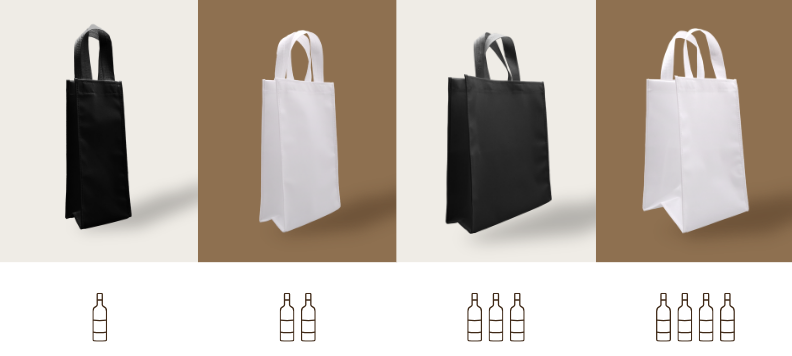
7. Formats designed for real use
Not all bottles or use cases are the same. That’s why multiple formats matter.
12 x 30 x 9 cm
Ideal for standard single bottles, quick sales, simple gifts.
18 x 30 x 9 cm
For larger diameter bottles, premium wines, more refined presentations.
18 x 30 x 18 cm
Versatile option: multi-bottle packs, gift sets, gourmet combinations.
27 x 30 x 9 cm
Wider format: special bottles, limited editions, differentiated presentations.
Each size responds to a real use case, not just dimensions.
8. Customization: when the bag becomes marketing
In a saturated environment, every surface is an opportunity.
A personalized bag is:
- A mobile advertising asset
- A constant brand reminder
- A loyalty tool
When customers reuse it, the brand stays visible.
In the wine sector, where repeat purchases and recommendations are key, this has direct impact.
9. Availability and flexibility for businesses
A common challenge is not just finding a good solution, but accessing it.
In this case:
- Stock availability
- Minimum order of 100 units
- Available in white and black
Accessible for both small businesses and established brands.
10. Sustainability and the future of wine packaging
Consumers have changed — and so have their expectations.
Packaging can no longer be immediate waste.
Reusability as value
- Reduces environmental impact
- Extends lifecycle
- Reinforces perceived quality
Recyclable materials
Responding to growing demand for responsible brands.
Clear retail trend
More businesses are shifting toward reusable solutions due to:
- Differentiation
- Customer experience
- Added value
11. When packaging stops being secondary
For a long time, the bag was an afterthought. Today, it’s becoming a priority.
Because it’s not just about carrying a bottle. It’s about how it is delivered, perceived and remembered.
A good wine bottle bag doesn’t need to shout. It simply performs, supports and reinforces.
And it is in that balance — between functionality, aesthetics and durability — where packaging stops being an accessory and becomes part of the experience.
That’s where it starts to make the difference.
Start your project with Diseños NT today by requesting a quote in less than a minute here: Contact Us – Disenos NT
)